
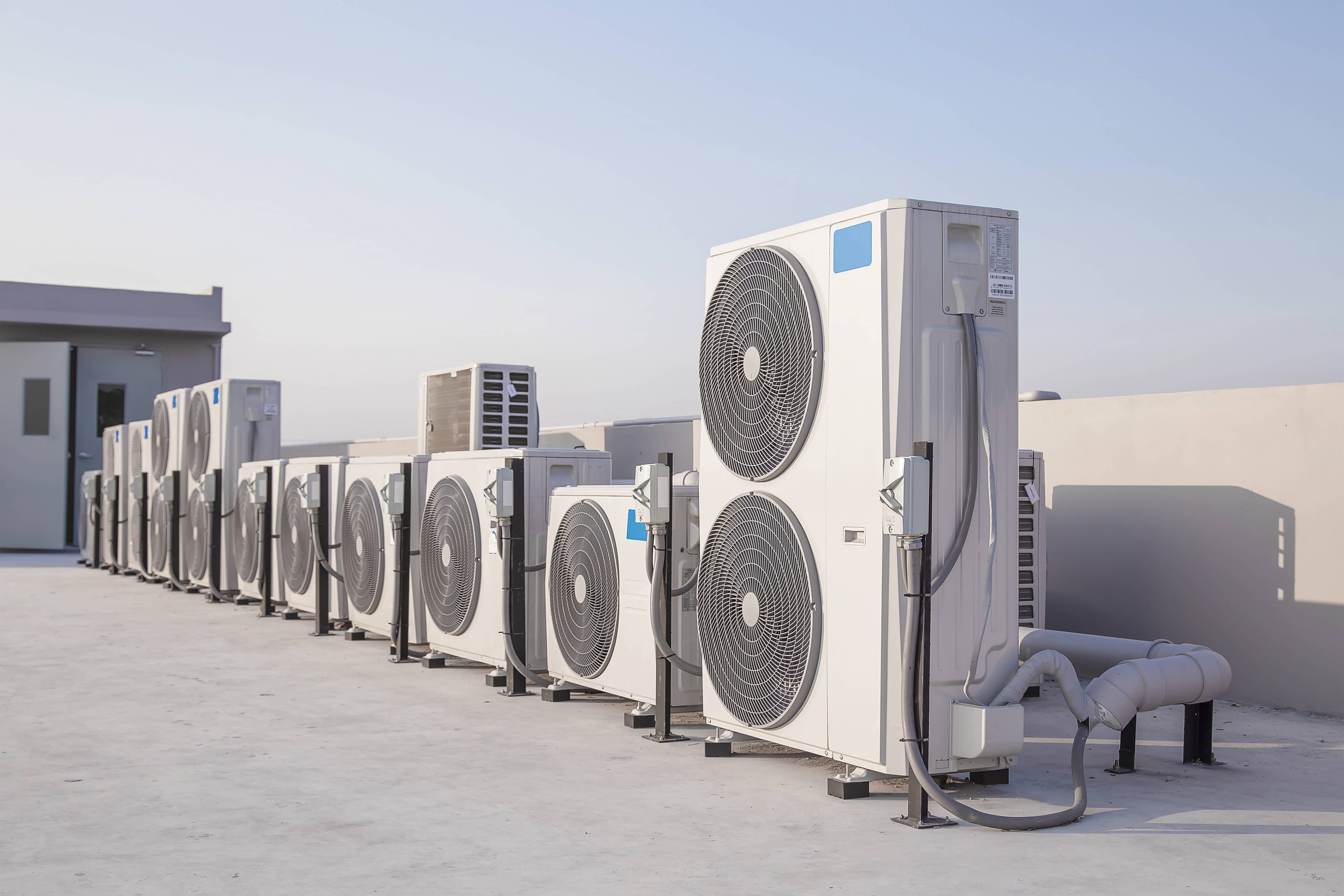
Packaged rooftop units, often called RTUs, are widely used to heat, cool, and ventilate commercial buildings.
Placing HVAC equipment on the roof saves indoor mechanical space and allows packaged equipment to serve individual areas of a property. But rooftop installation also creates its own service, access, weather, drainage, airflow, and replacement considerations.
We help with commercial rooftop HVAC unit repair, maintenance, and replacement in Saint Paul.
What Is a Packaged Rooftop Unit?
A rooftop unit contains multiple HVAC components inside a single outdoor cabinet.
Depending on the system, an RTU may provide:
- cooling;
- gas heating;
- electric heating;
- heat pump operation;
- air circulation;
- filtration;
- outdoor ventilation air;
- economizer operation.
Instead of having a furnace inside the building and a separate condensing unit outside, much of the system is located together on the roof.
Air is then distributed through ductwork connected to the unit.
Buildings That Commonly Use Rooftop HVAC Units
RTUs are frequently found on:
- retail stores;
- offices;
- restaurants;
- shopping centers;
- small commercial buildings;
- warehouses;
- schools;
- mixed-use properties;
- light industrial buildings.
A property may have one large rooftop unit or several smaller units serving separate areas.
Multiple units can make zoning easier and prevent one HVAC system from controlling the entire building.
Common Rooftop Unit Problems
Commercial RTUs contain many components, so similar symptoms can have very different causes.
Common complaints include:
- rooftop unit not starting;
- no cooling;
- no heat;
- weak airflow;
- blower running without heating or cooling;
- unit repeatedly cycling;
- unusual noise;
- excessive vibration;
- thermostat not controlling the unit correctly;
- one zone remaining too hot or too cold;
- water leaking from or around the system;
- ice on cooling components;
- unexpectedly high energy use.
Troubleshooting may involve mechanical, electrical, refrigeration, airflow, heating, or control components.
Rooftop HVAC Repair
Depending on the system and fault, repair work may involve components such as:
- compressors;
- condenser fan motors;
- blower motors;
- belts;
- bearings;
- capacitors;
- contactors;
- relays;
- control boards;
- sensors;
- thermostats;
- ignition components;
- burners;
- heat exchangers;
- evaporator coils;
- condenser coils;
- economizers;
- dampers;
- drain systems.
The useful question is not simply which part stopped working.
It is why the system is producing the reported symptom and whether other conditions contributed to the failure.
For broader troubleshooting information, see our commercial HVAC repair page.
Rooftop Unit Maintenance
RTUs are exposed to outdoor conditions year-round.
Wind, debris, precipitation, temperature swings, dirt, and normal mechanical wear can all affect equipment condition.
Routine maintenance may include inspection of:
- filters;
- coils;
- blower components;
- belts;
- motors;
- electrical components;
- drainage;
- burners;
- ignition;
- heat exchangers;
- refrigeration operation;
- compressors;
- economizer components;
- dampers;
- controls;
- cabinet condition.
Roof access also needs to be considered when planning maintenance.
See our commercial HVAC maintenance page for more detail.
When Should a Rooftop Unit Be Replaced?
An RTU does not need replacement simply because it has required a repair.
Replacement becomes worth considering when:
- major failures are becoming frequent;
- repair spending is increasing;
- the unit no longer maintains acceptable comfort;
- the equipment no longer matches the building's use;
- major components are deteriorating;
- replacement parts are difficult to obtain;
- the property is being remodeled;
- controls or zoning are being changed;
- several aging rooftop units can be addressed as part of a larger plan.
A replacement decision should consider the entire system and building rather than equipment age alone.
Replacing a Commercial Rooftop Unit Is More Than Swapping the Box
RTU replacement can involve several supporting parts of the building.
Rooftop curb
The existing roof curb may or may not match the new equipment.
An adapter or other modification may be required depending on the existing installation and selected replacement unit.
Duct transitions
Supply and return openings must work with the replacement system.
Electrical service
New equipment may have different electrical requirements.
Gas connections
Gas-fired rooftop equipment needs compatible gas connections and supporting components.
Controls
Thermostats, sensors, economizers, and building controls must work with the replacement equipment.
Equipment lifting
Many rooftop replacements require lifting equipment to remove the old unit and place the new one.
Access, surrounding buildings, parking, pedestrians, tenants, and business operations can affect how that work is scheduled.
Roof condition
HVAC replacement should not ignore the roof supporting it.
Existing penetrations, drainage, flashing, curb condition, and access may need to be reviewed during project planning.
Choosing a Replacement RTU
A replacement rooftop unit should be selected based on what the building currently requires.
Factors can include:
- heating load;
- cooling load;
- ventilation;
- occupancy;
- building use;
- operating hours;
- ductwork;
- zoning;
- controls;
- equipment staging;
- service access;
- existing electrical capacity;
- gas service;
- roof layout.
Matching the capacity printed on the old unit is not always enough.
The building may have changed since the original system was installed.
One Large RTU or Several Smaller Units?
Some commercial buildings are served by multiple rooftop systems.
This can provide practical advantages:
- separate temperature control for different areas;
- independent operating schedules;
- less reliance on one piece of equipment;
- easier accommodation of different occupancy patterns.
But multiple units also mean more filters, motors, compressors, controls, and components to maintain.
The better arrangement depends on building layout and use rather than a universal rule.
Economizers and Outdoor Air
Some rooftop units use economizer components to manage outdoor air under appropriate operating conditions.
When dampers, actuators, sensors, or controls are not working correctly, the system can bring in too much or too little outdoor air or operate inefficiently.
Economizer operation should therefore be considered during rooftop unit troubleshooting and maintenance rather than treating it as separate from the HVAC system.
Rooftop Unit Replacement Planning
If you are considering RTU replacement, useful information includes:
- number of rooftop units;
- equipment model information if available;
- approximate age;
- areas each unit serves;
- known heating or cooling problems;
- previous major repairs;
- roof access;
- planned building renovations;
- desired project schedule.
Replacing several rooftop systems can sometimes be planned in stages rather than waiting for each unit to fail separately.
For broader replacement information, visit our commercial HVAC installation page.
Request Rooftop HVAC Service in Saint Paul
Use the quote request above and describe whether you need:
- rooftop unit repair;
- routine maintenance;
- replacement planning;
- replacement of a failed RTU;
- service for multiple rooftop systems.
If possible, include the number of units, property type, reported symptoms, and any equipment information you already have.