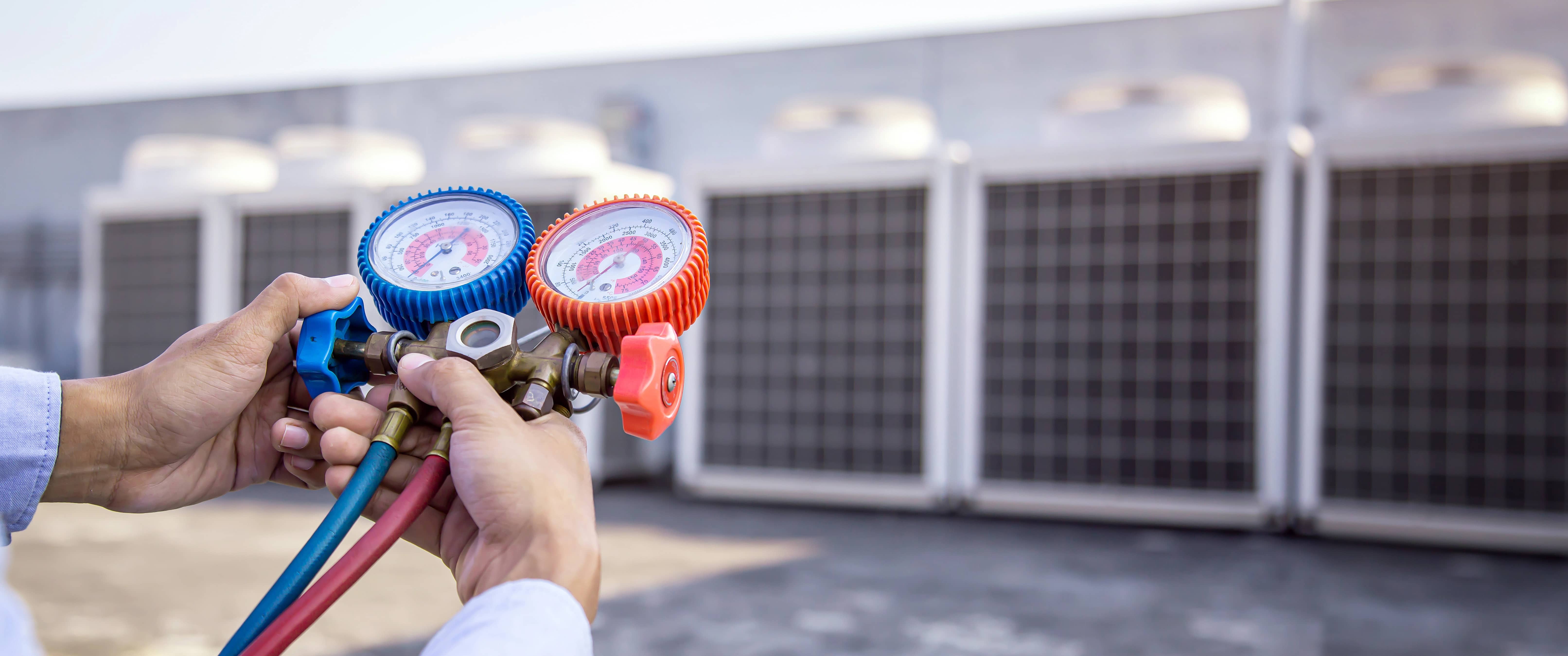
Commercial heating and cooling equipment often runs for long periods and serves spaces where unexpected downtime has real consequences.
Routine commercial HVAC maintenance gives building owners and managers a chance to identify worn components, airflow restrictions, dirty coils, drainage problems, control issues, and other developing conditions before they become larger service calls.
Maintenance cannot prevent every HVAC failure, but operating equipment for years without inspection is usually the more expensive strategy.
What Commercial HVAC Maintenance Is Intended to Do
The purpose of maintenance is not simply to make equipment look clean.
A useful maintenance visit should help answer questions such as:
- Is the system operating normally?
- Are filters or coils restricting airflow?
- Are electrical components showing signs of wear?
- Are motors, belts, or bearings deteriorating?
- Are drains operating correctly?
- Are heating and cooling components functioning as expected?
- Are thermostats and controls calling for the correct operation?
- Are there problems that should be repaired before heavy seasonal use?
Finding a worn belt or failing electrical component during scheduled maintenance is usually easier to deal with than finding it after the equipment stops during business hours.
What May Be Checked During Commercial HVAC Maintenance?
The exact checklist depends on the equipment.
Commercial maintenance may include inspection of:
- air filters;
- evaporator and condenser coils;
- blower components;
- motors;
- belts;
- bearings;
- electrical connections;
- contactors and capacitors;
- drain lines and drain pans;
- thermostats;
- temperature sensors;
- system controls;
- economizer components;
- burners and ignition components;
- heat exchangers where applicable;
- refrigeration operation;
- compressor operation;
- dampers;
- visible duct conditions;
- overall equipment condition.
Not every commercial HVAC system contains the same components. Maintenance should match the actual equipment installed at the property.
Why Filters Matter More Than They Seem
Filters are one of the simplest HVAC components and one of the easiest maintenance items to ignore.
A heavily restricted filter can reduce airflow through the system.
Poor airflow can contribute to:
- uneven temperatures;
- longer equipment runtime;
- reduced heating or cooling performance;
- coil icing;
- increased blower strain;
- occupant complaints.
Filter replacement frequency should be based on the building and operating conditions rather than an arbitrary calendar rule.
A lightly occupied office may have different needs from a restaurant, retail location, workshop, or property with substantial dust.
Coil Cleaning and Heat Transfer
Heating and cooling systems rely on air moving across heat-transfer surfaces.
When coils become coated with dirt and debris, system performance can suffer.
Outdoor coils can also collect leaves, debris, dirt, and other material depending on equipment location.
Cleaning requirements depend on equipment condition and environment, but coil condition should be part of routine system inspection.
Belts, Motors, and Moving Parts
Many commercial systems use belt-driven blowers or other mechanical components that wear during operation.
A worn belt may begin slipping, cracking, or losing tension before it breaks.
Motors and bearings can also develop noise, vibration, excessive heat, or other symptoms before complete failure.
Scheduled inspection gives you an opportunity to address those conditions before the system stops.
Drainage Problems
Cooling equipment removes moisture from indoor air.
That water needs a clear path out of the system.
Blocked drains or damaged drain components can result in:
- water around equipment;
- leaks into ceilings or occupied spaces;
- overflowing drain pans;
- equipment shutdown;
- moisture-related damage.
Drainage conditions are particularly important where HVAC equipment is located above occupied areas.
Commercial HVAC Controls Need Attention Too
Not every comfort problem is caused by failed mechanical equipment.
Commercial properties may have:
- multiple thermostats;
- scheduled temperature setbacks;
- occupancy settings;
- zone sensors;
- dampers;
- economizers;
- equipment staging;
- building control systems.
A thermostat, sensor, or control problem can cause excessive runtime, poor comfort, or equipment operation at the wrong times.
Maintenance should consider how the equipment is being commanded as well as whether individual components run.
Seasonal Commercial HVAC Maintenance
Saint Paul properties rely heavily on both heating and cooling equipment at different points of the year.
Checking equipment before periods of heavy use gives property owners more time to deal with problems than waiting until the system is under maximum demand.
Before cooling season
Useful areas to review can include:
- condenser condition;
- evaporator condition;
- filters;
- refrigeration operation;
- drain systems;
- blower operation;
- controls;
- thermostats.
Before heating season
Depending on the equipment, inspection may include:
- burners;
- ignition;
- heat exchangers;
- gas components;
- electrical heating components;
- blower operation;
- filters;
- controls;
- thermostats.
Maintenance should always be based on the equipment actually installed.
How Often Should Commercial HVAC Be Maintained?
There is no universal maintenance frequency that fits every commercial property.
The right schedule depends on:
- equipment type;
- equipment age;
- operating hours;
- occupancy;
- building use;
- filter loading;
- outdoor conditions;
- manufacturer recommendations;
- previous service history.
Equipment that runs for long hours or operates in demanding conditions may require more frequent attention than equipment serving a lightly used space.
Instead of choosing a schedule only because it is common, base maintenance frequency on the property and equipment.
Maintenance Does Not Replace Repair
Maintenance and repair solve different problems.
Maintenance is planned service intended to identify and address routine operating conditions.
Repair is needed when the system already has a fault such as:
- no heating;
- no cooling;
- failed compressor;
- failed motor;
- control malfunction;
- electrical failure;
- refrigerant circuit problem;
- major airflow problem.
If equipment is already malfunctioning, visit our commercial HVAC repair page.
Maintenance Can Also Inform Replacement Planning
Routine service creates a useful history of equipment condition.
If several major components are deteriorating, failures are becoming frequent, or the system no longer meets building requirements, continued repair may eventually make less financial sense than replacement.
That does not mean every older unit needs to be replaced.
It means maintenance gives owners more information before they are forced into a decision during an unexpected breakdown.
For replacement planning, see our commercial HVAC installation service.
Request Commercial HVAC Maintenance in Saint Paul
When requesting maintenance, provide:
- property type;
- number of HVAC units;
- equipment type if known;
- rooftop or indoor equipment location;
- approximate equipment age if known;
- current maintenance schedule;
- any existing comfort complaints;
- any recent repairs.
That information helps establish what equipment needs attention and what type of maintenance visit may be appropriate.